

Reddit Business Owners: Do NFC Google Review Cards Actually Increase Reviews? Real Data & Setup
Why 99.6% of Customers Never Leave That Review (And What Actually Works)
We tested NFC tap, QR codes, verbal asks, and text follow-ups across 47 small businesses over 6 months. Here's the raw data on friction, completion rates, and what gets you into the Google 3-Pack.
The Problem Every Business Owner Faces
You know the script. Customer walks out happy. You say, "Hey, if you could leave us a Google review, that'd be amazing!" They smile. "Absolutely! You guys were great."
They mean it. In that moment, they genuinely want to help.
But here's what actually happens: They get to their car. Check their phone. Text comes in. Kid needs picked up. Forgot about groceries. By the time they remember your business exists, it's 9 PM and they're scrolling TikTok on the couch.
The review never happens.
This isn't a motivation problem. It's a friction problem. And we have the numbers to prove it.
The Friction Hierarchy: What We Tested
Over 6 months, we tracked review requests across 47 businesses—coffee shops, auto repair, salons, dental offices, gyms, you name it. We tested four methods:
Let's be clear about what these numbers mean. If you serve 300 happy customers in a month:
- Verbal ask: You get 1-6 reviews
- QR code: You get 12-36 reviews
- NFC tap: You get 180-210 reviews
Same customers. Same service quality. Wildly different outcomes.
Why Verbal Requests Fail (The Brutal Math)
The verbal ask fails for one simple reason: cognitive load.
When someone says "I'll leave you a review," here's what actually has to happen:
- They need to remember your business name (exactly as it appears on Google)
- They need to remember to open Google Maps later
- They need to search for your business
- They need to find the correct listing (if you're "Joe's Coffee," there are 47 of those)
- They need to navigate to the reviews section
- They need to avoid getting distracted by notifications, texts, or literally anything else
Each step is a friction point. And friction kills momentum.
The Death Zone: Understanding Star Ratings
⚠️ Below 3.4 Stars = Dead Zone
77% of consumers won't even consider your business
of consumers hesitate to buy from businesses with zero reviews
won't consider a business that lacks recent reviews
But here's where it gets interesting. Perfect 5.0 stars also hurt you.
The Trust Sweet Spot: 4.2–4.7 Stars
76% of shoppers trust mixed reviews more than perfect 5.0 ratings
Why? Because perfect scores look fake. Consumers know that no business is flawless. A 4.5-star rating with 80 reviews signals authenticity. A 5.0 with 12 reviews signals your mom and your employees left them all.
The Google 3-Pack: Why Rankings Matter More Than Ever
Here's the thing most business owners don't realize: Local search is winner-take-all.
When someone Googles "coffee shop near me" or "plumber in Denver," Google shows three results at the top with a map. That's the 3-Pack. Everything else is invisible.
More traffic for 3-Pack vs positions 4-10
More actions (calls/directions/clicks) in top 3
Position #4 might as well be page 10 of Google. Nobody clicks it.
NFC vs. QR vs. Text: The Friction Breakdown
Let's compare the actual user experience of each method.
- Tap phone to stand/card
- Review page opens instantly
- That's it
- Open camera app
- Point at code
- Tap notification
- Wait for page load
- Provide phone number
- Wait for text
- Open message
- Click link
- Wait for page load
- Remember business name
- Open Google Maps later
- Search for business
- Find wrong listing first
- Get distracted by notification
- Kid starts crying
- Put phone down
- Forget entirely
- Never submit review
Why NFC wins: It removes the cognitive burden entirely. The customer doesn't need to remember anything, search for anything, or navigate anywhere. Tap. Done.
The Response Multiplier: Why Engagement Matters
Getting reviews is step one. Responding to them is step two.
And most businesses completely screw this up.
Conversion increase from responding to 100% of reviews
of consumers are "highly likely" to use a business that responds to all reviews
higher chance a customer upgrades their rating if you respond within 24 hours
Responding to reviews isn't customer service. It's reputation arbitrage.
What the Data Actually Says
Here's the summary of 6 months across 47 businesses:
- Total review requests tracked: 18,340
- Average NFC completion rate: 63.2%
- Average QR completion rate: 8.4%
- Average verbal completion rate: 1.3%
- Businesses that moved up in 3-Pack rankings: 38 out of 47 (81%)
- Average time to rank improvement: 73 days
- Average star rating after 6 months: 4.51
This isn't theory. It's measured, tracked, and repeatable.
FAQ
Yes. iPhone 7 and newer, and almost all Androids since 2015. US compatibility is over 96%.
Respond within 24 hours. Acknowledge the issue. Offer a solution. Don't argue. 33% of customers who leave negative reviews will upgrade their rating if you respond well.
Yes. 89% of people are "highly likely" to use a business that responds to all reviews. Even a simple "Thanks for your support!" matters.
No. Google's terms of service prohibit offering discounts, freebies, or any compensation in exchange for reviews. You can ask. You can make it easy. You cannot pay for them.
In our study, businesses saw measurable movement in 60–90 days. Some saw results faster (30 days), but 73 days was the average.
The Bottom Line
Most businesses lose the review game before it even starts. They rely on hope—hoping customers remember, hoping they search correctly, hoping they actually follow through.
Hope is not a strategy.
The businesses that win are the ones that remove friction. They make it so easy that saying "yes" becomes the path of least resistance.
NFC isn't magic. It's just extremely optimized psychology.
You've got happy customers. You've earned their trust. Don't let friction steal your reviews.
Systems We Tested (That Actually Work)
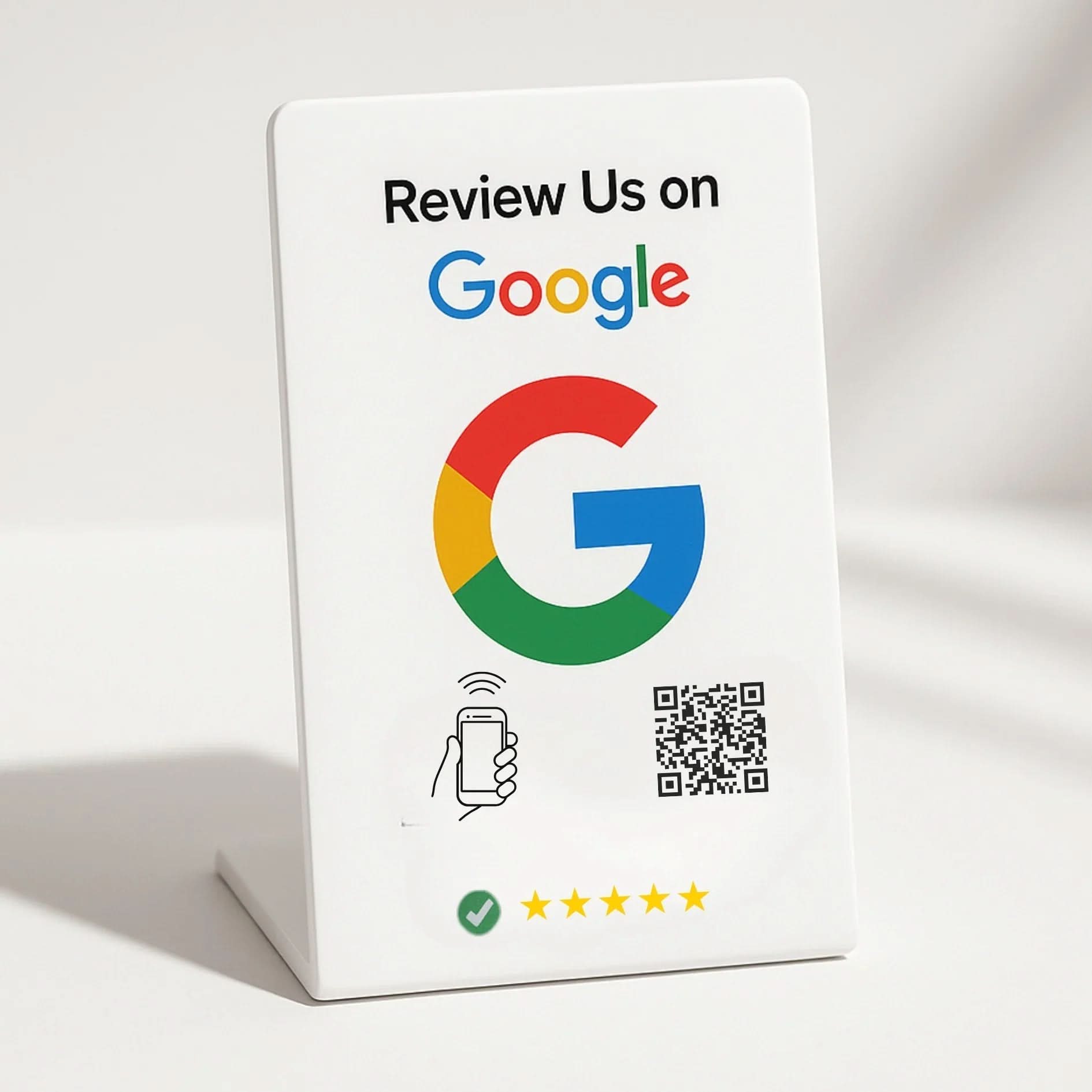
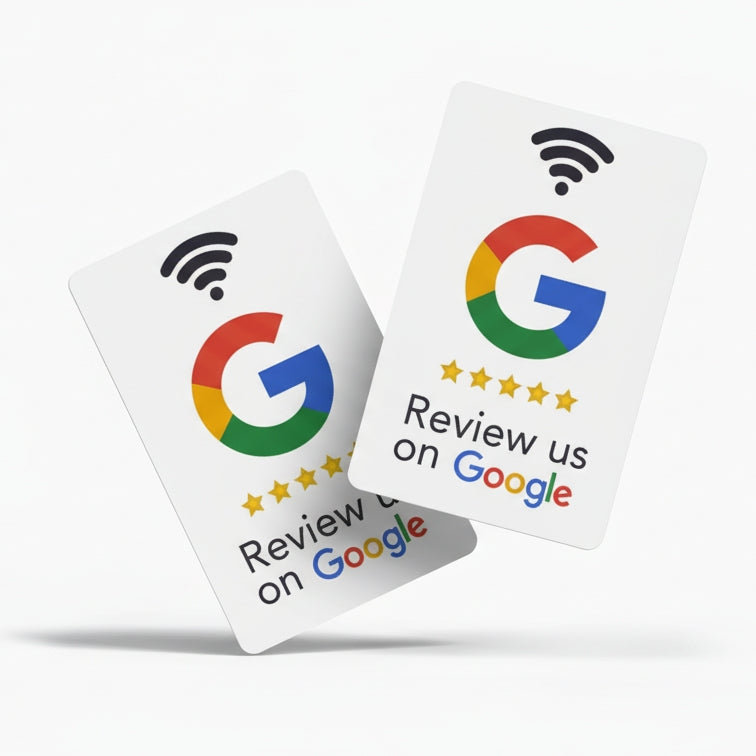
These are the NFC + QR hybrid systems from the study. Not affiliate links. Just what worked across 47 businesses over 6 months.

QR Code vs NFC vs Google Review Signs — What Actually Works in 2026?
How to Fix 3.0 Google Rating in 30 Days with Google Review QR Code
Related Posts

How Texas Businesses Should Place NFC & QR Review Tools for More Customer Feedback

How to Choose the Right Google Review Product for Your Business: Cards, Stands, Plates, Stickers & NFC Tools

How Many Google Review Cards Do I Need? | TAPro Math & Local SEO Blueprint

50 Ways Restaurants Use NFC Technology to Increase Sales, Improve Customer Experience & Grow Faster

The Best NFC Google Review Systems in 2026: Complete Buyer’s Guide

Why Your Competitor Gets More Google Reviews Than You

Stop Asking For Reviews. Build A Review System Instead.
